Best tools for freelance web developers

Best tools for freelance web developers – How to Manage Your Career for Scale and Profit

As a freelancer with over 13 years of experience building digital solutions at hiajeet.com, I’ve learned that the difference between a struggling freelancer and a successful consultant isn’t just talent — it’s systems.

Talent gets you started. Systems keep you profitable and sane.

When you’re managing global clients, you can’t afford to lose track of a task or overpay on transaction fees. To build a sustainable career, you need a tech stack that works as hard as you do.

In this guide, I’m breaking down the essential tools I recommend for managing a high-growth freelancing career.

1. Mastering Project Management: Stay Organized, Stay Profitable

When you move from “doing gigs” to “running a business,” your brain is no longer a reliable place to store deadlines. You need a single source of truth.

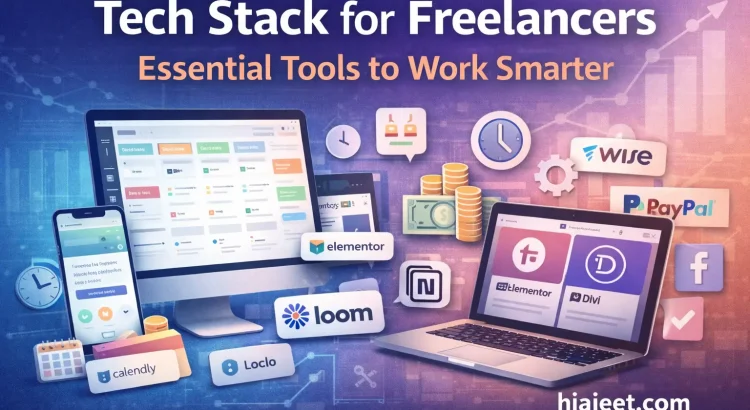
  • Monday.com: My top pick for visual thinkers. It’s highly customizable and lets you track project phases from discovery to deployment. It’s also excellent for showing clients exactly where their project stands.
  • HubSpot: Known as a CRM, but extremely useful for freelancers managing a sales pipeline. It helps track outreach, follow-ups, and how consulting leads convert.

2. Web Development & Design: Speed Meets Power

Efficiency matters. You want to deliver bespoke-feeling websites without reinventing the wheel every time. Within the WordPress ecosystem, two builders consistently stand out:

  • Elementor: Ideal for rapid prototyping and high-end design flexibility. Perfect for startups that need to launch quickly.
  • Divi: Excellent for cohesive brand layouts and long-term client management. Especially useful for established brands.

Pro Tip: Choose your page builder based on project complexity and the client’s ability to manage the site after launch.

3. Getting Paid: Maximizing Your Take-Home Pay

You work hard for your money. Don’t let unnecessary fees quietly erode your profits.

  • Wise (formerly TransferWise): A game-changer for international clients. It offers real exchange rates and significantly lower fees than traditional banks or PayPal — especially for large milestones.
  • PayPal: Convenient and familiar, but expensive. Best used for smaller or quick transactions rather than primary invoicing.

4. Bonus: Tools Every Freelancer Needs

To truly level up your workflow, I recommend adding these tools:

  • Calendly: Eliminate scheduling back-and-forth. Let clients book calls instantly.
  • Loom: Replace long emails with short screen recordings. It builds clarity and trust fast.
  • Notion: Create a personal knowledge base for code snippets, client notes, and business planning.

Final Thoughts

Tools are the foundation of freedom.

Managing a long-term freelancing career has taught me that when your projects are organized and your payments are optimized, you gain time — and clarity — to focus on solving real problems for clients.

Ready to take your digital presence to the next level? Whether you’re a startup or an established brand, I can help you build scalable solutions that deliver results.

Web Design That Goes Beyond Looks: Building Websites That Actually Work

Web Design That Goes Beyond Looks: Building Websites That Actually Work

Web design is often misunderstood as simply choosing colors, fonts, and layouts. While visuals matter, effective web design is about much more than appearance. A well-designed website guides users, builds trust, and supports real business goals.

Good web design isn’t about decoration — it’s about communication.

In today’s competitive digital landscape, web design must balance aesthetics, usability, performance, and strategy. A beautiful site that loads slowly or confuses users will fail — no matter how good it looks.

What Modern Web Design Really Means

Modern web design focuses on creating experiences, not just pages. Every design decision should help visitors understand your brand, navigate effortlessly, and take action.

Every design choice should answer one question: does this help the user?

  • User Experience (UX): Clear navigation, readable layouts, and intuitive interactions.
  • Responsive Design: A seamless experience across desktops, tablets, and mobile devices.
  • Performance: Fast-loading pages that don’t frustrate users or hurt SEO.
  • Accessibility: Inclusive design that works for all users.

Why Good Web Design Impacts Business Results

Your website is often the first impression of your business. Poor design can make even strong brands look unreliable, while thoughtful design builds credibility instantly.

Users decide whether to trust your website in seconds — design makes that decision for them.

Effective web design helps:

  • Increase conversion rates
  • Reduce bounce rates
  • Improve SEO performance
  • Build long-term brand trust

Web Design for Performance and Scalability

Design choices affect more than visuals. Heavy layouts, unoptimized assets, and poor structure can slow down your site and make future changes difficult.

A fast, scalable website is part of good design — not a technical afterthought.

Scalable web design ensures your website can grow with your business. This means clean layouts, reusable components, and a structure that supports new content, features, and integrations over time.

The Importance of Ongoing Design Aftercare

One of the biggest mistakes businesses make is treating web design as a one-time task. Design needs evolve as user behavior, technology, and business goals change.

Websites don’t fail at launch — they fail when they stop evolving.

Ongoing design aftercare includes:

  • Improving layouts based on real user data
  • Updating designs to match new branding
  • Optimizing pages for better engagement
  • Ensuring consistency as new pages are added

Choosing the Right Web Designer

A good web designer doesn’t just ask how your site should look — they ask what your business needs to achieve. Design should be aligned with strategy, content, and long-term growth.

The right designer thinks in outcomes, not just layouts.

Final Thoughts

Great web design is a balance of creativity, usability, and technical understanding. It’s not about trends or flashy effects — it’s about building websites that feel effortless to use and support real business outcomes.

When web design is done right, users don’t notice the design — they simply enjoy the experience.

Ready to Improve Your Website?

Great web design isn’t just about visuals — it’s about performance, usability, and long-term results. If you’re planning a new website or want to improve an existing one, working with the right expert makes all the difference.

I don’t just design websites — I provide ongoing support and aftercare to ensure your site continues to perform long after launch.

Ajeet Singh - Senior Web Developer and Tech Consultant

14 Years of Digital Craftsmanship: The Journey of Ajeet Singh

In the fast-evolving world of web development, tools and frameworks come and go, but results are timeless. My name is Ajeet Singh, and for over 14 years, I have been turning complex business problems into elegant, scalable digital solutions.

Whether you are a startup looking to make your mark or an established brand needing a technical overhaul, my goal is simple: I build powerful, effective websites that deliver results.

The Foundation: Engineering Excellence

My journey into the world of technology began with a B.Tech in Computer Science (Class of 2010). This formal education provided me with the under-the-hood understanding of how systems work—logic, architecture, and efficiency—that goes far beyond simple drag-and-drop web design.

From Corporate MNCs to Global Independence

My career started in the fast-paced environment of corporate MNCs. By 2013, I had reached the level of Senior Web Developer, mastering the complexities of high-stakes project management and clean, production-grade code.

However, I realized that I wanted to offer more than just code; I wanted to offer partnerships. In 2014, I launched my independent practice to provide businesses with a more personalized, strategic approach. Since then, I’ve had the privilege of delivering digital solutions for international clients and agencies across the globe.

“You aren’t just hiring a developer; you’re gaining a strategic consultant dedicated to your brand’s long-term digital evolution.”

Why Business Owners Choose Ajeet Singh

In 14+ years of experience, I’ve learned that a website is only successful if it solves a business problem. I position myself as a Web Developer, Consultant, and Problem Solver. My process is built on three pillars:

Let’s Build Your Digital Future

The digital landscape of 2025 requires more than just a pretty website. It requires speed, security, and a seamless user experience. With over a decade of hands-on development behind me, I have the expertise to ensure your brand doesn’t just exist online—it thrives.

Let’s connect and discuss your next project:

How to Choose the Right Freelance Web Developer in Bengaluru (or Worldwide)

How to Choose the Right Freelance Web Developer in Bengaluru (or Worldwide)

Hiring a freelance web developer is no longer limited by geography. Whether you’re a startup in Bengaluru or a growing business anywhere in the world, the right developer can work remotely and deliver exceptional results. The challenge isn’t location — it’s choosing someone who understands your business, provides long-term support, and thinks beyond just writing code.

If you’re searching for a freelance web developer in Bengaluru, a tech consultant for startups, or are considering hiring a remote developer, this guide will help you make the right decision.

1. Questions You Should Ask Before Hiring a Freelance Developer

Before signing a contract or paying a deposit, ask questions that reveal how the developer works after the website goes live.

  • Do you provide aftercare and ongoing support? Websites need updates, fixes, and improvements. A developer who “builds and disappears” can become a costly problem later.
  • How do you handle performance, security, and updates? These are critical for long-term success.
  • Will I be able to scale or modify the site easily? Your business will evolve — your website should too.

Reliable freelancers don’t just deliver a project; they stay involved. Ongoing aftercare ensures your website remains fast, secure, and aligned with your business goals.

2. The Difference Between a Coder and a Tech Consultant

Many people hire a “coder” when what they really need is a tech consultant.

A coder focuses on completing tasks: writing code, building pages, and following instructions. A tech consultant, on the other hand, helps you make the right technical decisions from the start.

  • A coder asks, “What do you want built?”
  • A tech consultant asks, “What problem are we solving?”

For startups and growing businesses, this difference matters. The right consultant helps you avoid overbuilding, choose scalable tools, and plan for future growth — not just today’s launch.

The right developer isn’t just someone who can build your website — it’s someone who supports your business long after launch.

3. Why Hiring a Solo Expert Is More Cost-Effective Than a Big Agency

Large agencies often look impressive, but they come with higher costs, slower communication, and multiple layers of management. When you hire a solo freelance developer with 10+ years of global experience, you get direct access to the person doing the work.

  • No account managers or middlemen
  • Faster decision-making
  • Lower overhead costs
  • Personal accountability for quality and results

A solo expert can deliver agency-level quality without agency-level pricing, while still offering something agencies often don’t: consistent aftercare and long-term partnership.

4. Aftercare Matters More Than You Think

One of the biggest pain points clients face when hiring freelancers is lack of support after launch. Bugs appear, updates are needed, or performance issues surface — and suddenly the developer is unreachable.

A professional freelance web developer doesn’t just “build and leave.” Ongoing support, performance optimization, and technical guidance are part of a responsible development process. This is especially important when you’re hiring a remote developer and relying on them long-term.

Explore My Work and Services

If you want to see real-world examples of projects built with scalability and aftercare in mind, explore my work here: View My Portfolio

To understand how I help businesses with custom development, performance optimization, and long-term support, visit: View My Services

Ready to Move Forward?

If you’re evaluating a freelance web developer in Bengaluru or considering hiring a remote expert worldwide, the next step doesn’t have to be complicated.

Schedule a free 15-minute tech consultation to discuss your project, challenges, and goals — with no obligation.

Book Your Free Tech Consultation →

Here is a blog post draft for your Bulk Source Code Downloader tool, designed to be informative, SEO-friendly, and drive traffic to the tool page. How to Bulk Download Website Source Code for Analysis and Backup

How to Bulk Download Website Source Code (Free HTML Tool)

Have you ever needed to analyze the HTML structure of multiple web pages at once? Maybe you’re a student learning how professional sites are built, a developer looking to create a local backup of a project, or a designer conducting competitive research.

Manually going to each URL, right-clicking, and selecting “View Page Source” or “Save As…” for dozens of pages is incredibly tedious and time-consuming.

Fortunately, there’s a much faster way.

In this guide, I’ll show you how to use my free Bulk Website Source Code Downloader to fetch the HTML from up to 50 URLs in a single click.

Why Bulk Download Source Code?

There are several practical reasons why you might need to grab the source code from multiple URLs simultaneously:

  1. Learning and Education: For aspiring web developers, one of the best ways to learn is by examining real-world code. You can download the source from several well-designed sites to study their HTML structure, class naming conventions, and content organization.
  2. Project Backups & Archiving: Before making major changes to a website, it’s always smart to keep a backup. This tool lets you quickly create a local archive of important pages.
  3. Competitive Analysis: Need to see how competitors structure their landing or product pages? Download multiple URLs to compare SEO elements, headings, and layouts.
  4. Offline Viewing: Downloaded source code allows you to view a website’s basic HTML structure even without an internet connection.

How to Use the Bulk Website Source Code Downloader

Using the tool is incredibly simple. Follow these steps:

Step 1: Go to the Tool Navigate to the Bulk Website Source Code Downloader page.

Step 2: Enter Your URLs Paste the URLs you want to download into the text area, placing each URL on a new line. You can enter up to 50 URLs.

Step 3: Download Click the Download Source Code button. The tool will generate a single ZIP file containing the HTML for all valid URLs.

Step 4: Extract and Analyze Extract the ZIP file on your computer. You’ll now have individual HTML files ready to open in your browser or code editor.

A Note on Responsible Use

While this tool is powerful, please use it responsibly. It’s intended for learning, analysis, and legitimate backups. Always respect copyright laws and avoid copying or redistributing protected content.

Ready to Get Started?

Stop wasting time with manual downloads. Streamline your workflow today.

Try the Free Bulk Source Code Downloader Now →

Need help with a more complex project? I offer custom web development services specializing in WordPress, WooCommerce, and bespoke web solutions. Contact me today to discuss your needs.

How to Perform a Quick SEO Link Audit in Under 5 Minutes

How to Perform a Quick SEO Link Audit in Under 5 Minutes

Links are the “roads” of your website. They guide users to important content and tell Google which pages are the most valuable. However, as a website grows, those roads can become messy—broken links, too many external redirects, or poor internal linking can hurt your rankings.

The good news? You don’t need an expensive enterprise suite to clean things up. In this guide, I’ll show you how to perform a high-impact link audit in under five minutes using my free Link Extractor Tool.

Why Should You Audit Your Links?

Before we dive into the “how,” let’s look at the “why.” A clean link profile helps with:

  • Crawl Budget: Helping Googlebot find your important pages faster.
  • User Experience (UX): Ensuring visitors don’t hit dead ends.
  • Link Equity: Making sure your ranking power stays on your site rather than leaking out to low-quality external sites.

Step 1: Extract Your Data

The first step is seeing exactly what is on your page.

  1. Go to the Link Extractor Tool.
  2. Enter the URL of the page you want to audit (start with your homepage or your most popular blog post).
  3. Click Extract.

Within seconds, you’ll have a clean list of every internal and external link found on that page.

Step 2: Analyze Your External Links (The “Leaking” Check)

Look at the list of external links and ask yourself:

  • Are these sites still relevant? If you linked to a source years ago that is now broken, it reflects poorly on your authority.
  • Am I linking to competitors? Sometimes we accidentally link to a competitor when we should be linking to our own services.
  • Are there too many? Pages with excessive external links can dilute your SEO value.

Step 3: Check Your Internal Anchor Text

Your anchor text (the clickable words) tells Google what the destination page is about.

  • The fix: Replace vague text like “Click here” or “Read more” with descriptive phrases such as “Custom WordPress Development Services” or “SEO Audit Tips.”

Step 4: Identify Missing Opportunities

While reviewing your extracted links, notice what isn’t there.

  • Does your blog post link back to your Contact page?
  • Does it link to a related portfolio project? If not, you’re missing a conversion opportunity.

Summary: Keep It Clean

A website is never truly finished. Regular link audits help keep your site healthy, usable, and competitive in search results.

Ready to see what’s under the hood of your website? Try the Free Link Extractor Tool →

Want to Take Your Website to the Next Level?

If your link audit uncovers deeper technical issues or your site feels slow and outdated, I can help. With over 10 years of experience in custom web development and performance optimization, I build websites that rank and convert.

View my Portfolio or Contact me for a Tech Consultation.